
Please Leave Us A Message
Privacy statement: Your privacy is very important to Us. Our company promises not to disclose your personal information to any external company with out your explicit permission.

 Product Categories
A 60 kN lapping platform costs about US20,000 a year to own before it laps a single ball, so the buy-or-outsource decision turns on one number: whether you can keep roughly 20 tonnes a year flowing through it.Below that volume, outsourcing is cheaper and always will be. Above it, in-house lapping usually lands between US0.28 and US0.35 per kilo against a purchased lapping service at US0.80–2.00 per kilo. Here is the full cost stack, the formula, and the three tonnages where the answer flips — the buy or outsource steel ball lapping break even calculation that Anqing Machine Tool runs with buyers before quoting a machine.
In-house cost per kilo is fixed cost divided by tonnage, plus about US$0.20 of variable cost — so tonnage, not machine price, drives the answer. Buyers usually compare the machine price to the outsourcing rate and stop there. That comparison is meaningless, because a machine is a fixed asset that gets cheaper per kilo the harder you run it, while an outsourcing rate stays flat forever. The in house lapping cost per kg for steel ball factory math only points one way: down, as tonnage rises.
The cost stack for a mid-size horizontal lapping platform, working 3–25 mm balls at 60 kN with 200–250 kg loads:
| Cost line | Annual (US$) | Note |
| Depreciation, 8 years on US$60,000 | 7,500 | Book cost, not cash, but it is real capital |
| Maintenance and spares, 3% of capex | 1,800 | Spindle, hydraulics, seals |
| Lapping plates, 2 sets/year | 3,200 | Cast iron or resin wheel, depending on grade |
| Power, 7.5 kW at 65% load, 4,000 h | 2,000 | At US$0.10/kWh |
| Operator, 0.5 FTE | 4,000 | One operator can run two machines |
| Floor space and utilities | 1,500 | Includes slurry settling and disposal |
| Fixed total | 20,000 | Before any ball is lapped |
| Variable: slurry, abrasive, rework | ~0.20/kg | Scales with output |
Divide US20,000 by realistic annual tonnage and the shape of the decision appears. At 50 tonnes, fixed cost is US0.40/kg. At 150 tonnes it is US0.13/kg. Add the US0.20 variable and the in house lapping cost per kg for steel ball factory economics move from US0.60 to US0.33 without changing a single machine setting.
Two numbers get left out of most spreadsheets and both matter:
✅ Bottom line: Fixed cost divided by tonnage plus US$0.20 variable is the whole model — machine price alone never decides the buy-or-outsource question.
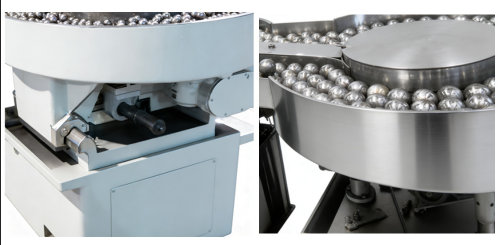
Break-even tonnage equals annual fixed cost divided by the gap between the outsourcing rate and your variable cost. That is the entire buy or outsource steel ball lapping break even test, and it needs exactly three numbers. Using the stack above, the gap is US1.00/kg at an outsourcing rate of US1.20/kg, so 20 tonnes a year pays for the machine.Lapping Ball Machine,High Speed Cold Heading Machine For Steel Balls,Ball Grinding Machine
The sensitivity is what makes this useful. Lapping service rates vary widely by region, grade and batch size — G5 work costs far more than G10, and small batches carry a premium:
| Outsourced lapping rate | Break-even, existing operator (t/yr) | Break-even, extra operator hired (t/yr) |
| US$0.80/kg | 38 | 47 |
| US$1.20/kg | 20 | 28 |
| US$2.00/kg | 11 | 16 |
Read the middle row as the base case. If you already have someone who can tend a machine, 20 tonnes a year — roughly 1.7 tonnes a month — is the line. If you have to hire, the line moves to 28 tonnes. Replace either column with your own outsourcing lapping service price per kg quote and the table becomes your decision, not an illustration.
Three things shift the answer more than the machine price:
The same logic explains why outsourcing lapping service price per kg quotes are so hard to compare: one quote includes sorting, another excludes it, a third prices G10 work at G5 rates because the provider assumes you cannot tell the difference. Ask each supplier for the grade, the sorting gate and the cycle record — then apply the formula to a like-for-like number.
Anqing Machine Tool supplies both ends of this decision honestly: the 3M7790 and 3M7766 lapping platforms, and a written process evaluation that includes the volume assumption behind the recommendation. As a manufacturer that has built bearing finishing equipment since 1955 and drafted China's industry standards for lapping and polishing machines, the company's engineers tend to ask for your monthly tonnage before they ask for your budget.
✅ Bottom line: Divide fixed cost by the rate gap — below roughly 20 tonnes a year, outsource; above it, own the process and the know-how.
Q: What is the minimum volume to justify buying a lapping machine? A: Usually 15–20 tonnes a year if you already have an operator, or 25–30 tonnes if you must hire one. Below that, the fixed cost per kilo exceeds most outsourcing rates and you also carry the ramp-up risk. Between 15 and 25 tonnes the decision depends on lead time and quality control, not on cost.
Q: Is a used machine a shortcut to the break-even point? A: It lowers capex, but the two items that decide lapping quality — plate flatness and spindle runout — are exactly what wears first. A used machine with a dished plate will cost more in rejected batches than it saves at purchase. If you buy used, inspect runout at the spindle and check plate flatness with a straight edge and feeler gauge before payment.
Q: Can you supply a machine sized for a specific tonnage, including OEM configurations? A: Yes. Anqing Machine Tool Co., Ltd. configures lapping platforms by ball diameter range, load, control system and voltage, and supplies OEM builds for overseas factories. Share your monthly tonnage, ball sizes and target grade, and the factory will size the platform rather than upsell the largest model.
Send us your current outsourcing rate, monthly tonnage and grade mix, and Anqing Machine Tool will return a one-page break-even sheet using your figures plus the platform configuration that fits the tonnage. If the math says keep outsourcing, we will tell you that — a machine that never pays back is a bad reference for both of us.
Phone:+86 18055626858


ANQING MACHINE TOOL CO.,LTD
EMAIL : info@aqballgrinder.com
ADD. : No. 136-1, Jixian North Road,, Anqing, Anhui China
Privacy statement: Your privacy is very important to Us. Our company promises not to disclose your personal information to any external company with out your explicit permission.
Fill in more information so that we can get in touch with you faster
Privacy statement: Your privacy is very important to Us. Our company promises not to disclose your personal information to any external company with out your explicit permission.