
Please Leave Us A Message
Privacy statement: Your privacy is very important to Us. Our company promises not to disclose your personal information to any external company with out your explicit permission.

 Product Categories
This article gives you the formula, a worked example, and the hidden costs that tip the decision either way.
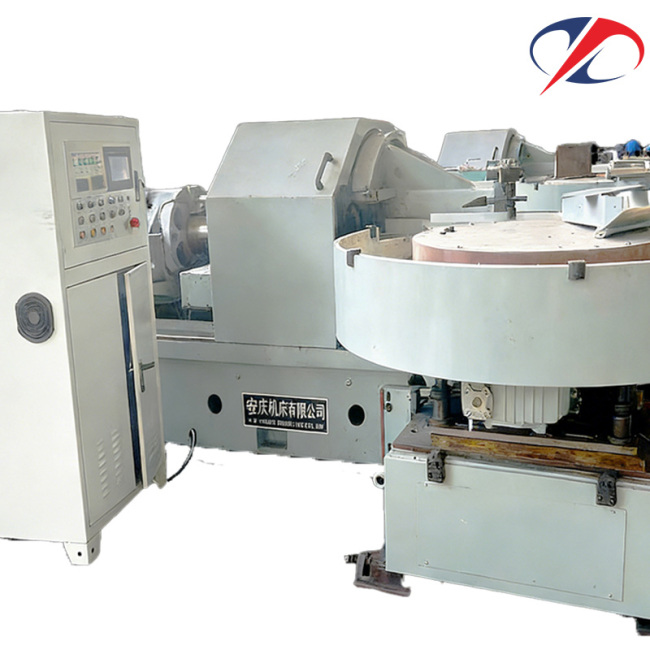
You reach break-even when the annualized cost of owning a Ball Grinding Machine equals the premium you would otherwise pay a supplier — and for a typical twin-disc line that threshold lands near 12 tonnes of balls per year. Stated plainly, the buy steel ball grinding machine or outsource break even point is where annualized ownership cost equals the supplier premium, and the formula is short enough to run on a phone.
Break-even volume (per year) = Annualized machine cost ÷ (Outsource cost per kg − In-house cost per kg)
Annualized machine cost = (Machine price ÷ Useful life) + Interest + Maintenance reserve. The cost to grind Steel Balls in house vs buying from supplier separates on that per-kilo gap, so small differences in either cost move the threshold hard.
Here is a worked example using mid-range figures for a standard twin-disc grinder:
| Input | Value |
| Machine price (twin-disc grinder) | $80,000 |
| Useful life | 5 years |
| Annualized depreciation | $16,000 |
| Outsource / buy-ground cost | $2.50 per kg |
| In-house operating cost | $1.20 per kg |
| Saving per kg | $1.30 |
| Break-even volume | ≈ 12.3 tonnes per year |
At 12.3 tonnes a year the two options cost the same. Above it, owning wins; below it, a toll supplier or buying ground blanks is cheaper. A φ10 mm ball weighs about 4 grams, so 12 tonnes is roughly 3 million balls annually — a realistic mid-size bearing line running two shifts. If your machine price is $120,000 instead, the threshold climbs to about 18 tonnes; if your per-kilo saving is $2 instead of $1.30, it falls to about 8 tonnes.
The trap is treating the threshold as fixed. Anqing Machine Tool recommends rerunning it with your own quotes, because the ratio — not the headline number — is what decides you.
✅ Bottom line: Run the division first; owning a grinder only pays once your annual ball volume clears roughly 10–15 tonnes.
The variables that break the simple math are capacity utilization, consumables, and whether you actually need a full line — ignore them and the break-even number lies to you. A steel ball grinding machine roi payback period calculation that counts only depreciation and power misses the real drivers.
Capacity utilization is the first one. A grinder amortized over five years still loses money if it runs one shift instead of two, because the annualized cost is fixed while the saving only accrues on balls actually processed. Any cost to grind steel balls in house vs buying from supplier comparison must assume a realistic run rate, not nameplate capacity.
Consumables are the second. Grinding wheels, coolant, and lapping compound recur every month and are easy to underbook. They belong in the in-house cost line, not left out.
The third is the downstream chain. Grinding alone does not deliver a finished bearing ball — you still need a Lapping Ball Machine for roundness grade and a Polishing Ball Machine for surface finish. If you only need occasional grinding, buying a full Precision Steel Ball Equipment line is overkill; a High Speed Cold Heading Machine For Steel Balls only enters the picture if you also form blanks from wire. For contoured valve seats, a Spherical Base Surface Magnetic Non-magnetic Grinding Machine is a separate specialized buy.
Quality risk is the fourth. In-house, you own every scrapped batch; with a supplier you negotiate reject allowances up front. That risk premium belongs in the outsourcing cost, not ignored. Anqing Machine Tool sees most shops underestimate consumables and over-estimate utilization, which is why the written model beats gut feel.
✅ Bottom line: Add utilization, consumables, and downstream stages to the model; a grinder only makes sense when volume is steady and you need more than occasional grinding.
Q: How do I calculate the payback period for a steel ball grinding machine? A: Payback (years) = Machine price ÷ Annual net saving, where annual net saving = (Outsource cost − in-house cost) × Annual volume − fixed overhead. A steel ball grinding machine roi payback period calculation like this typically returns 2–4 years for shops above the break-even volume and never closes for low-volume buyers.
Q: Is outsourcing cheaper for low-volume steel ball grinding? A: Yes, almost always below about 10–15 tonnes per year. For the buy steel ball grinding machine or outsource break even point, the supplier wins until your volume covers the annualized machine cost, because you avoid capex, consumables, and a dedicated operator.
Q: Can you help me run this break-even check before I commit? A: Yes. Anqing Machine Tool Co., Ltd. offers a free break-even assessment: send your ball diameter, material, grade, and monthly volume, and our engineers return a configuration and factory-direct quote, including an honest recommendation to outsource if the math says so. We build OEM lines, but only when owning actually pays.
Send Anqing Machine Tool your ball diameter, material, target grade, and monthly volume. We will run the steel ball grinding machine roi payback period calculation on your real numbers and tell you, in writing, whether buying or outsourcing is cheaper — even if the answer is "don't buy from us yet." As a manufacturer with 70 years in Precision Steel Ball Equipment, Anqing Machine Tool would rather earn the line sale later than lose your trust now.
Phone:+86 18055626858
Mail:529588185@qq.com


ANQING MACHINE TOOL CO.,LTD
EMAIL : info@aqballgrinder.com
ADD. : No. 136-1, Jixian North Road,, Anqing, Anhui China
Privacy statement: Your privacy is very important to Us. Our company promises not to disclose your personal information to any external company with out your explicit permission.
Fill in more information so that we can get in touch with you faster
Privacy statement: Your privacy is very important to Us. Our company promises not to disclose your personal information to any external company with out your explicit permission.